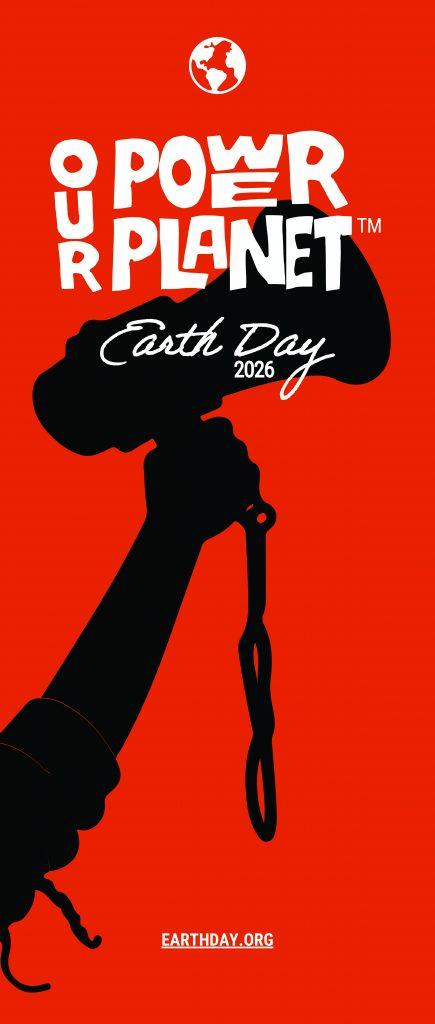
This year marks the 55th anniversary of the first Earth Day. The Indianapolis Public Library is excited to be a part of the celebration!
The first Earth Day occurred on April 22, 1970, when “more than 20 million people throughout the United States participated in antipollution demonstrations and other environmental activities,” noted Yolanda Smith in the Indianapolis Recorder. It was the brainchild of Senator Gaylord Nelson of Wisconsin and activist Denis Hayes. Both wanted to tap into the student movements of the time to raise awareness about pollution and other harms to the environment. As a result, “Earth Day 1970 became, and continues to be to this day, the largest secular day of protest in the world,” according to the Earth Day Network.
Many people in the Indianapolis area were also involved, from average citizens to public officials. High school students in Speedway “decided to do their bit for Earth Day. They promptly went out and gathered enough trash to fill some twenty large garbage bags,” reported the Speedway Flyer. The Indianapolis Star observed that “Both Governor Edgar D. Whitcomb and Indianapolis Mayor Richard G. Lugar asked all citizens to join in special programs” that day, which was “officially tagged ‘Environmental Teach-In Day’ in Indiana.” Earth Day became a major event all around the state of Indiana, right from its very inception.
Earth Day at the Library
The Indianapolis Public Library has been involved in Earth Day activities for many years. For example, back in 2011, our Southport Branch won a nationwide Earth Day recycling challenge! As a Library press release stated at the time, “the Southport Branch of The Indianapolis Public Library, located at 2630 E. Stop 11 Road, recycled nearly six-and-a-half tons of paper in March 2011 as part of the 2011 Earth Day Challenge sponsored by the company, Paper Retriever, which provides outdoor recycling bins at the library.” Their efforts earned them an “Earth Day Bonus” of $190 from Paper Retriever. The bonus was “used to purchase colorful lamps and chairs that are needed for the library’s teen area.”
This year on Earth Day (April 22), the Library will have a celebration at the West Perry Branch from 10:30 a.m.-12 p.m. “Nature Play Day” will focus on how people of all ages can connect to the outdoors. Learn more about “Nature Play Day”.
The Indianapolis Public Library’s Commitment to Sustainability
As an institution dedicated to Indianapolis and its environment, The Indianapolis Public Library is committed to sustainability as one of its core values. Below are a few examples of what the Library does to put its values into action for the Indianapolis community.
- If you have an electric vehicle, you can charge it at an EV station at three of the Library’s branches (Fort Ben, Glendale, and West Perry).
- Many of the Library’s locations—including East Washington, Eagle, Fort Ben, Glendale, West Petty, Michigan Road, and the Library Services Center— have solar panels installed to provide electricity.
- Many Library locations are Leadership in Energy and Environmental Design (LEED) certified. They follow globally recognized standards for efficiency, cost-saving, and health-conscious design. In fact, the West Perry Branch was awarded the 2023 Green Building of the Year Award in the LEED for Building Design and Construction category by the U.S. Green Building Council’s East North Central Region.
- The drinking fountains at all the Library’s locations have been upgraded to also have water bottle refilling stations.
- Green thumbs can take advantage of the Library’s seed library, which provides free seeds for vegetables, herbs, and flowers.
These are just a handful of the sustainability initiatives that The Indianapolis Public Library has committed to. Learn about the Library’s Commitment to Sustainability.
The Challenge of Microplastics
One way that you can improve the environment is by learning about one of the biggest ecological challenges today: microplastics.
Plastics have completely transformed the world, from their use in food production, medical supplies, and even clothing. But there’s a drawback to the use of plastics developed with petroleum products: they aren’t biodegradable. As a result, plastic waste is transformed by natural and artificial processes into increasingly smaller plastic pieces, which can become microscopic. Hence the term “microplastics.”
Due to the overreliance on single-use plastics like water bottles and food containers, microplastics have permeated the oceans, integrated themselves into livestock, and have even been found in human placenta. All of this has profound implications for public health. As Stephanie Dutchen outlined in her piece for Harvard Medicine, “Investigators are probing how they get into other organs and tissues from the lungs and gastrointestinal tract. Microplastics smaller than 1 micrometer, known as nanoplastics, worry researchers the most because they can infiltrate cells.” This has the potential to cause long-term health issues within communities large and small.
To learn more about microplastics, check out this list of titles available to you from The Indianapolis Public Library. The book list, compiled by The Indianapolis Public Library’s Deb Lambert, Chief Collection Management Officer, delves into the history, science, and public policy aspects of microplastics—providing you with the tools to understand one of the most important environmental issues people face.
The Indianapolis Public Library is steadfast in its commitment to expanding literacy through its collections, services, and programs, and that includes learning about the environment. On Earth Day, please consider visiting a Library branch to explore all the Library has to offer!
~ Justin Clark, Sr. Manager, Digital Marketing Strategy and Analytics